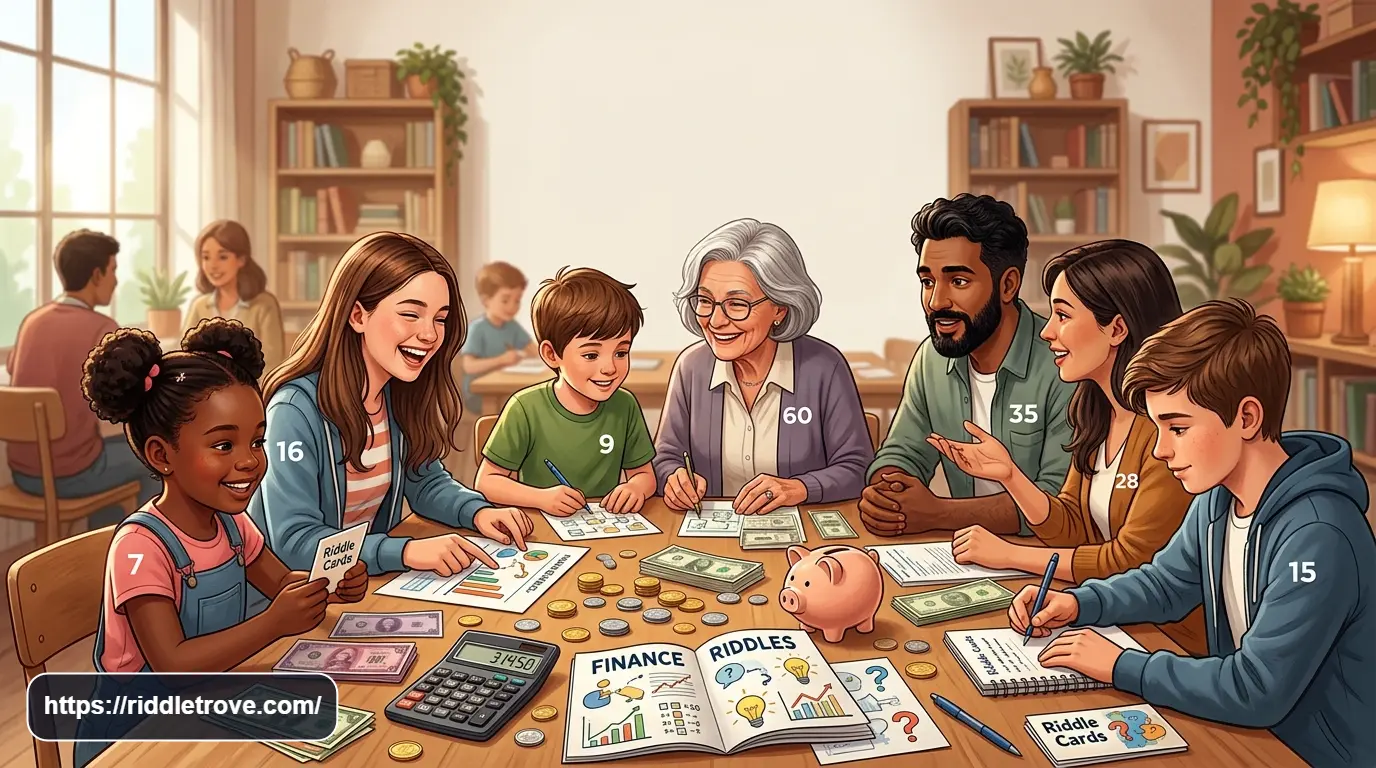
Finance can sound complicated when it is buried under budgets, interest rates, loans, and investment terms. But a clever riddle can turn those ideas into quick puzzles that are easier to remember.
These finance riddles with answers mix money basics, banking, saving, investing, budgeting, and playful wordplay. The first sections are lighter, while the later riddles require more careful thinking. They can work for kids learning money concepts, students, families, or adults who enjoy a financial brain teaser.
Easy Finance Riddles 💰
Riddle 1: I can be saved, spent, earned, or lost. What am I?
Answer: Money
Riddle 2: I am round, shiny, and can jingle in your pocket. What am I?
Answer: A coin
Riddle 3: I hold your money but cannot spend it. What am I?
Answer: A wallet
Riddle 4: I plan where your money should go. What am I?
Answer: A budget
Riddle 5: I am money you receive for work. What am I?
Answer: Income
Riddle 6: I am money set aside for later. What am I?
Answer: Savings
Riddle 7: I can be paper or digital and represent money. What am I?
Answer: A banknote
Riddle 8: I take your money today and promise more later. What am I?
Answer: An investment
Riddle 9: I can be earned, saved, or spent, but never eaten. What am I?
Answer: Money
Riddle 10: I am a place where money can be kept and managed. What am I?
Answer: A bank
Finance Riddles for Kids 🐷
Riddle 11: I have a slot on top and often look like a pig. What am I?
Answer: A piggy bank
Riddle 12: I am money earned for doing a job or chore. What am I?
Answer: An allowance
Riddle 13: I cost money today but may help you later. What am I?
Answer: An investment
Riddle 14: I help you decide whether you can afford a toy. What am I?
Answer: A budget
Riddle 15: I am small money that can add up over time. What am I?
Answer: Coins
Riddle 16: I am something you want but do not always need. What am I?
Answer: A want
Riddle 17: I am something important you must pay for. What am I?
Answer: A need
Riddle 18: I disappear when you buy something but may return when you earn more. What am I?
Answer: Money
Riddle 19: I grow when you regularly put money into me. What am I?
Answer: Savings
Riddle 20: I help you tell saving from spending. What am I?
Answer: A budget
Funny Finance Riddles 😂
Riddle 21: Why did the dollar bring an umbrella?
Answer: It expected a little change in the weather.
Riddle 22: What does a banker wear when the weather gets cold?
Answer: A loan coat.
Riddle 23: Why did the coin go to school?
Answer: It wanted more cents.
Riddle 24: What did the dollar say after getting promoted?
Answer: “I finally made some sense!”
Riddle 25: Why did the wallet feel empty?
Answer: It had too many expenses.
Riddle 26: What is a banker’s favorite kind of interest?
Answer: Compound interest.
Riddle 27: Why did the budget break up with the shopping spree?
Answer: It needed better boundaries.
Riddle 28: Why was the penny so confident?
Answer: It knew it had cents.
Riddle 29: Why did the investor bring a ladder?
Answer: To reach higher returns.
Riddle 30: What did the piggy bank say after saving all month?
Answer: “I’m feeling pretty rich!”

Banking Riddles 🏦
Riddle 31: I let you take out cash without visiting a teller. What am I?
Answer: An ATM
Riddle 32: I show how much money is in your account. What am I?
Answer: A balance
Riddle 33: I am money placed into your bank account. What am I?
Answer: A deposit
Riddle 34: I am money taken from your bank account. What am I?
Answer: A withdrawal
Riddle 35: I can help you pay without carrying cash. What am I?
Answer: A debit card
Riddle 36: I let you borrow now and repay later. What am I?
Answer: A loan
Riddle 37: I am the extra money charged for borrowing. What am I?
Answer: Interest
Riddle 38: I protect valuables inside a secure bank container. What am I?
Answer: A safe-deposit box
Riddle 39: I am a number used to identify your bank account. What am I?
Answer: An account number
Riddle 40: I am a record showing money entering and leaving an account. What am I?
Answer: A bank statement
Saving and Spending Riddles 💵
Riddle 41: The more carefully you track me, the easier spending becomes. What am I?
Answer: A budget
Riddle 42: I am money kept for an unexpected problem. What am I?
Answer: An emergency fund
Riddle 43: I am money you spend regularly on necessities. What am I?
Answer: An expense
Riddle 44: I am the amount left after expenses are paid. What am I?
Answer: Surplus
Riddle 45: I can tempt you to buy something you did not plan to buy. What am I?
Answer: An impulse purchase
Riddle 46: I help you reach a future money goal. What am I?
Answer: A savings plan
Riddle 47: I am money saved for a specific future purchase. What am I?
Answer: A sinking fund
Riddle 48: I am the opposite of spending money. What am I?
Answer: Saving
Riddle 49: I can make a small purchase feel much larger when repeated daily. What am I?
Answer: A recurring expense
Riddle 50: I am the habit of spending less than you earn. What am I?
Answer: Living below your means
100 Cybersecurity Riddles With Answers
Hard Finance Riddles 🧠
Riddle 51: I grow on both the money you saved and the growth it already earned. What am I?
Answer: Compound interest
Riddle 52: I measure what remains after debts are subtracted from assets. What am I?
Answer: Net worth
Riddle 53: I can rise when prices rise, even when your paycheck stays the same. What am I?
Answer: Cost of living
Riddle 54: I spread money across different investments to reduce concentration risk. What am I?
Answer: Diversification
Riddle 55: I measure how much profit comes from an investment compared with its cost. What am I?
Answer: Return on investment
Riddle 56: I am a claim against what you own. What am I?
Answer: A liability
Riddle 57: I am what a business owns that has economic value. What am I?
Answer: An asset
Riddle 58: I am what remains for owners after a company’s liabilities are subtracted from its assets. What am I?
Answer: Equity
Riddle 59: I show whether money is flowing into or out of a business. What am I?
Answer: Cash flow
Riddle 60: I can make a loan cheaper or more expensive without changing the amount borrowed. What am I?
Answer: The interest rate
Investment Riddles 📈
Riddle 61: I represent a small ownership share in a company. What am I?
Answer: A stock
Riddle 62: I am money lent to a company or government that may pay interest. What am I?
Answer: A bond
Riddle 63: I spread one investment across many holdings. What am I?
Answer: A mutual fund
Riddle 64: I track a group of investments instead of choosing each one separately. What am I?
Answer: An index fund
Riddle 65: I am the money an investment earns for you. What am I?
Answer: A return
Riddle 66: I am a payment some companies make to shareholders. What am I?
Answer: A dividend
Riddle 67: I am the risk that an investment may lose value. What am I?
Answer: Investment risk
Riddle 68: I am buying different investments so one poor performer hurts less. What am I?
Answer: Diversification
Riddle 69: I describe the mix of investments you own. What am I?
Answer: An asset allocation
Riddle 70: I am an investment account often used to save for retirement. What am I?
Answer: A retirement account
Budget and Credit Riddles 💳
Riddle 71: I help you compare planned spending with actual spending. What am I?
Answer: A budget
Riddle 72: I let you buy now and pay later, usually under agreed terms. What am I?
Answer: Credit
Riddle 73: I am the amount you still owe on a loan or credit account. What am I?
Answer: A balance
Riddle 74: I show how reliably you have handled borrowed money. What am I?
Answer: Credit history
Riddle 75: I can affect whether lenders see you as a higher or lower credit risk. What am I?
Answer: A credit score
Riddle 76: I am the percentage charged for borrowing money, often expressed yearly. What am I?
Answer: An interest rate
Riddle 77: I reduce the amount of money you can spend because it must cover an obligation. What am I?
Answer: Debt
Riddle 78: I am money you borrow to buy something expensive, such as a home. What am I?
Answer: A mortgage
Riddle 79: I am the amount you pay upfront when buying something with financing. What am I?
Answer: A down payment
Riddle 80: I am a payment made regularly until a debt is repaid. What am I?
Answer: An installment
Tricky Finance Riddles 🔍
Riddle 81: I can be positive or negative, but I always compare what comes in with what goes out. What am I?
Answer: Cash flow
Riddle 82: You earn $100, spend $70, and save the rest. What did you save?
Answer: $30
Riddle 83: I am worth more when prices fall, but I am not a sale coupon. What am I?
Answer: Purchasing power
Riddle 84: A $50 item is discounted by $10. What is the sale price?
Answer: $40
Riddle 85: I can increase your wealth without being cash sitting in your wallet. What am I?
Answer: An asset
Riddle 86: You invest $100 and it gains 10%. How much is it worth before fees or taxes?
Answer: $110
Riddle 87: I can be paid monthly, but I am not always the same amount. What am I?
Answer: An expense
Riddle 88: I am a financial goal with a date and a dollar amount. What am I?
Answer: A savings target
Riddle 89: I lower your taxable income when the law allows it. What am I?
Answer: A tax deduction
Riddle 90: I am money you owe the government based on taxable income or purchases. What am I?
Answer: A tax

Final Finance Riddle Challenge 🏆
Riddle 91: You have $20. You spend $7 and then earn $5. How much do you have?
Answer: $18
Riddle 92: An investment grows from $100 to $120. What is the gain?
Answer: $20
Riddle 93: You save $25 each week for four weeks. How much did you save?
Answer: $100
Riddle 94: A $200 item is reduced by $50. What percentage discount is that?
Answer: 25%
Riddle 95: You earn $500 and spend $350. What percentage of your income remains?
Answer: 30%
Riddle 96: A $60 purchase has a $15 discount. What fraction of the original price was discounted?
Answer: One-quarter
Riddle 97: You have $80 and divide it equally among four savings goals. How much goes to each?
Answer: $20
Riddle 98: An account starts with $1,000 and gains $50. What is the new balance before fees or taxes?
Answer: $1,050
Riddle 99: You spend $30 from $100, then save half of what remains. How much do you save?
Answer: $35
Riddle 100: You invest $200. It rises 10%, then falls 10%. Is it back at $200?
Answer: No. It is $198.
Conclusion
These finance riddles with answers turn familiar money ideas into short challenges that test reasoning, vocabulary, and financial understanding. Start with the easier riddles, then move into banking, saving, investing, credit, and the final challenge. For kids, they can introduce basic money concepts in a playful way. For adults and students, the harder questions provide a quick mental workout. The best approach is to hide the answers, solve each riddle first, and only then check your result.
Frequently Asked Questions
What are finance riddles?
Finance riddles are short puzzles built around money, banking, saving, investing, budgeting, credit, taxes, and other financial concepts.
Are finance riddles good for kids?
Yes. Simple finance riddles can introduce concepts such as saving, spending, budgeting, coins, and earning money in an approachable way.
What are some hard finance riddles?
Hard finance riddles often involve compound interest, net worth, investment returns, diversification, cash flow, percentages, and multi-step financial reasoning.
Can finance riddles be funny?
Yes. Finance has plenty of wordplay opportunities involving terms such as cents, interest, loans, change, balance, and money.
What can finance riddles teach?
They can reinforce financial vocabulary and encourage learners to think about saving, spending, borrowing, investing, and planning.
Are finance riddles useful in classrooms?
They can work as short warm-ups, discussion starters, brain breaks, or review activities in financial-literacy lessons.
How can I make finance riddles harder?
Use less obvious clues, require multiple reasoning steps, introduce percentages or comparisons, and avoid revealing the financial concept too early.
What is the best way to solve a finance riddle?
Read every clue carefully, identify the financial concept being described, consider alternate answers, and check whether every clue fits your final answer.