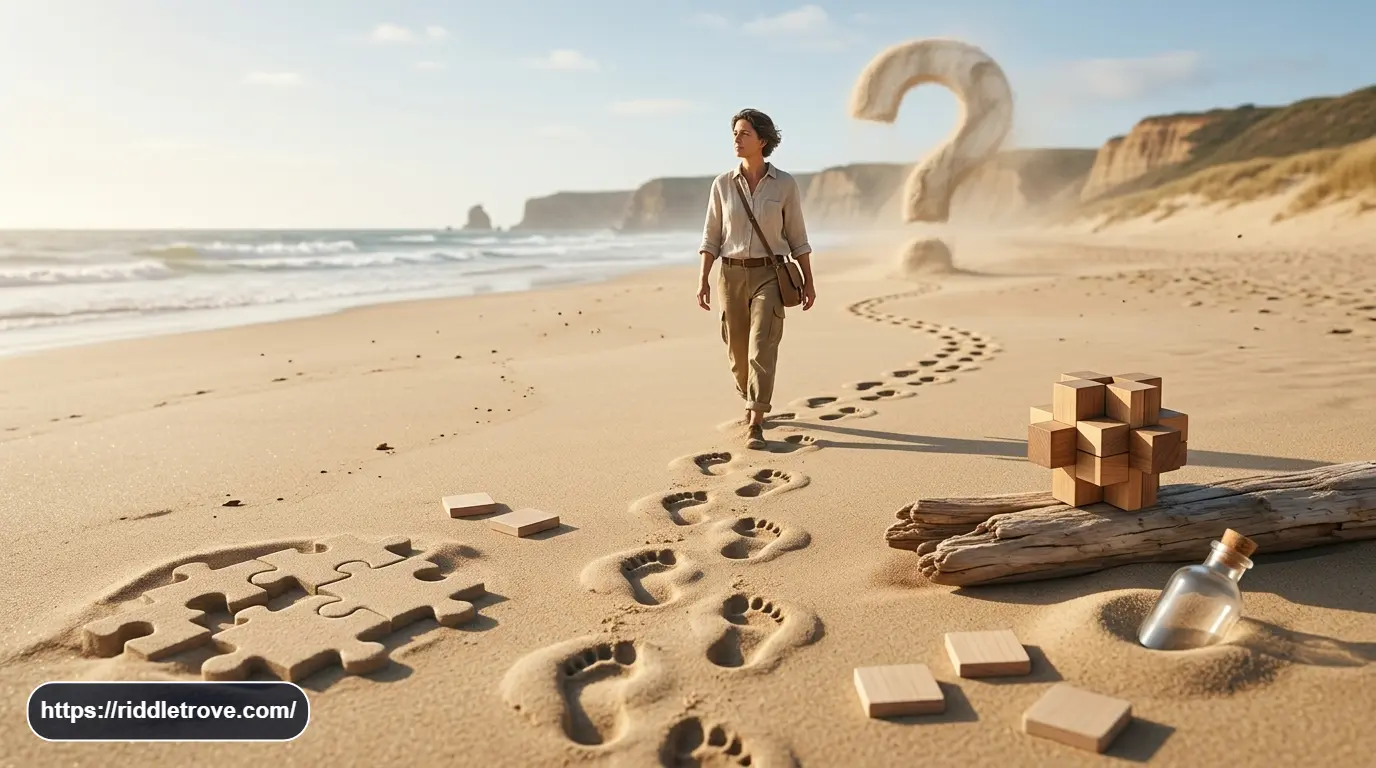
Some riddles seem confusing because one simple word can have two meanings. “The more you take, the more you leave behind” is a classic example. Before checking the answer, think about something you take while moving from one place to another.
The Answer
Answer: Footsteps
Every time you take a step, you leave a footprint or trace behind. So, the more steps you take, the more marks you can leave behind.
Hint
Think about walking. What do you take every time you move forward?
Now that you know the answer, try these 100 short riddles.
Easy Everyday Riddles
Riddle 1: I have keys but no locks. What am I?
Answer: A keyboard.
Riddle 2: I get wetter as I dry. What am I?
Answer: A towel.
Riddle 3: I have hands but cannot clap. What am I?
Answer: A clock.
Riddle 4: I have a face but no eyes. What am I?
Answer: A clock.
Riddle 5: I have teeth but cannot bite. What am I?
Answer: A comb.
Riddle 6: I have a neck but no head. What am I?
Answer: A bottle.
Riddle 7: I have one eye but cannot see. What am I?
Answer: A needle.
Riddle 8: I fly without wings. What am I?
Answer: Time.
Riddle 9: I have legs but cannot walk. What am I?
Answer: A table.
Riddle 10: I have a thumb and four fingers. What am I?
Answer: A glove.
Clever Wordplay Riddles
Riddle 11: What word becomes shorter when you add two letters?
Answer: Short.
Riddle 12: What has a bottom at the top?
Answer: Your legs.
Riddle 13: What starts with E and ends with E?
Answer: An envelope.
Riddle 14: What word is always spelled wrong?
Answer: Wrong.
Riddle 15: What has a ring but no finger?
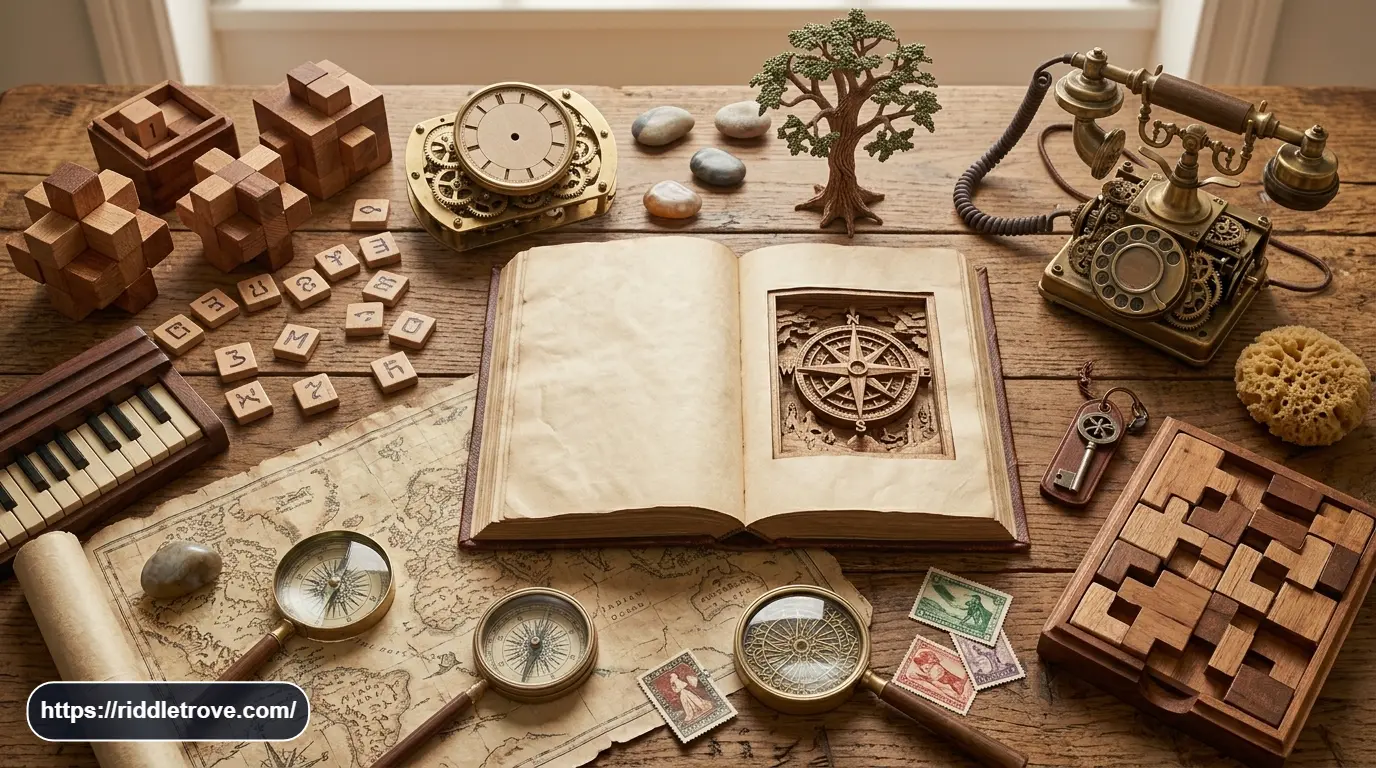
Answer: A telephone.
Riddle 16: What can you catch but never throw?
Answer: A cold.
Riddle 17: What can run but never walk?
Answer: Water.
Riddle 18: What has a head and a tail but no body?
Answer: A coin.
Riddle 19: What has words but never speaks?
Answer: A book.
Riddle 20: What has branches but no leaves?
Answer: A bank.
Tricky Object Riddles
Riddle 21: What has a heart that never beats?
Answer: An artichoke.
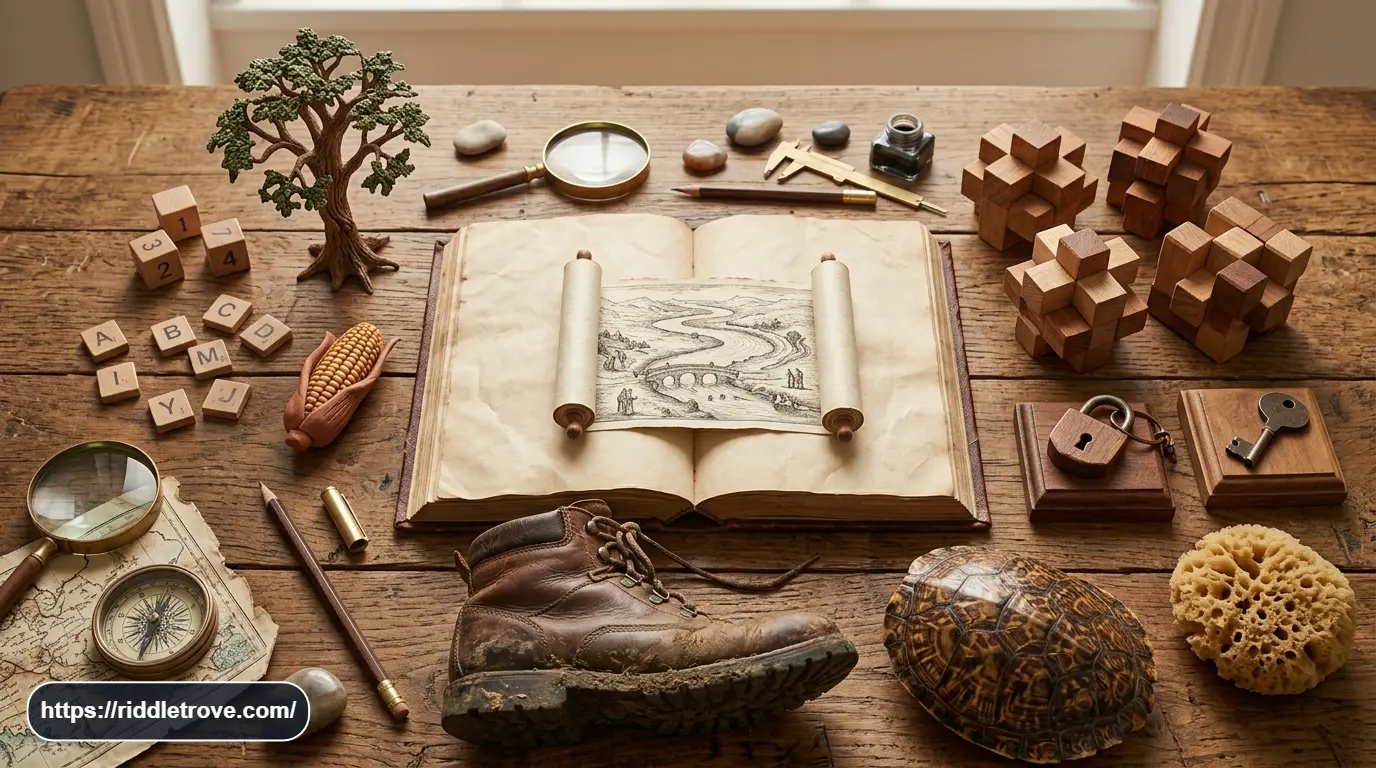
Riddle 22: What has a bed but never sleeps?
Answer: A river.
Riddle 23: What has a mouth but never eats?
Answer: A river.
Riddle 24: What has an ear but cannot hear?
Answer: Corn.
Riddle 25: What has a tongue but cannot talk?
Answer: A shoe.
Riddle 26: What has a spine but no bones?
Answer: A book.
Riddle 27: What has a bark but no bite?
Answer: A tree.
Riddle 28: What has a shell but no egg?
Answer: A turtle.
Riddle 29: What has four wheels and flies?
Answer: A garbage truck.
Riddle 30: What can fill a room but takes no space?
Answer: Light.
Funny Riddles With Clever Answers
Riddle 31: Why did the math book look sad?
Answer: It had too many problems.
Riddle 32: What kind of coat is always wet?
Answer: A coat of paint.
Riddle 33: What room has no doors or windows?
Answer: A mushroom.
Riddle 34: Why was six afraid of seven?
Answer: Seven ate nine.
Riddle 35: What animal can jump higher than a house?
Answer: Any animal. Houses cannot jump.
Riddle 36: Why did the bicycle fall over?
Answer: It was two-tired.
Riddle 37: What has many ears but cannot hear?
Answer: A cornfield.
Riddle 38: What gets broken without being held?
Answer: A promise.
Riddle 39: What has a bottom but no top?
Answer: A leg.
Riddle 40: What can be cracked but never held?
Answer: A joke.
Nature and Outdoor Riddles
Riddle 41: I fall but never get hurt. What am I?
Answer: Rain.
Riddle 42: I shine but am not a lamp. What am I?
Answer: The sun.
Riddle 43: I appear at night and disappear by day. What am I?
Answer: A star.
Riddle 44: I have no wings but can fly. What am I?
Answer: A cloud.
Riddle 45: I roar but have no mouth. What am I?
Answer: Thunder.
Riddle 46: I move with the wind but have no legs. What am I?
Answer: A leaf.
Riddle 47: I have rings but no fingers. What am I?
Answer: A tree.
Riddle 48: I can be seen in water but never get wet. What am I?
Answer: A reflection.
Riddle 49: I follow you outside but vanish in darkness. What am I?
Answer: A shadow.
Riddle 50: I come after rain and show many colors. What am I?
Answer: A rainbow.
100+Riddles: I Can Be Cracked, Made, Told and Played Riddle
Logic and Lateral Thinking Riddles
Riddle 51: What has cities but no people?
Answer: A map.
Riddle 52: What has countries but no houses?
Answer: A map.
Riddle 53: A man shaves many times a day. Who is he?
Answer: A barber.
Riddle 54: What can you never put in a saucepan?
Answer: Its lid.
Riddle 55: What comes once in a minute and twice in a moment?
Answer: The letter M.
Riddle 56: What is at the end of a rainbow?
Answer: The letter W.
Riddle 57: What begins with T, ends with T, and has T inside?
Answer: A teapot.
Riddle 58: What can travel around the world while staying in one corner?
Answer: A stamp.
Riddle 59: What belongs to you but others use it more?
Answer: Your name.
Riddle 60: What has many keys but opens no doors?
Answer: A piano.
Short Trick Riddles
Riddle 61: What has no beginning or end?
Answer: A circle.
Riddle 62: What goes up but never comes down?
Answer: Your age.
Riddle 63: What has one head, one foot, and four legs?
Answer: A bed.
Riddle 64: What can you hear but not touch?
Answer: Sound.
Riddle 65: What gets bigger the more you take away?
Answer: A hole.
Riddle 66: What can be opened but has no door?
Answer: An umbrella.
Riddle 67: What has a lock but no door?
Answer: Hair.
Riddle 68: What has a crown but is not a king?
Answer: A tooth.
Riddle 69: What can be seen once in a year and twice in a week?
Answer: The letter E.
Riddle 70: What has a head, a tail, is brown, and has no legs?
Answer: A penny.
Medium Brain Teasers
Riddle 71: A farmer has 17 sheep. All but 9 run away. How many remain?
Answer: 9.
Riddle 72: What comes down but never goes up?
Answer: Rain.
Riddle 73: If two is company and three is a crowd, what are four and five?
Answer: Nine.
Riddle 74: What number becomes smaller when turned upside down?
Answer: 9.
Riddle 75: What can you hold without touching it?
Answer: Your breath.
Riddle 76: What has 13 hearts but no organs?
Answer: A deck of cards.
Riddle 77: What weighs nothing but can sink a ship?
Answer: A hole.
Riddle 78: What can you make but cannot see?
Answer: A noise.
Riddle 79: What has many needles but cannot sew?
Answer: A pine tree.
Riddle 80: What is always in front of you but cannot be seen?
Answer: The future.
Hard and Tricky Riddles
Riddle 81: What disappears as soon as you say its name?
Answer: Silence.
Riddle 82: What can be cracked, made, told, and played?
Answer: A joke.
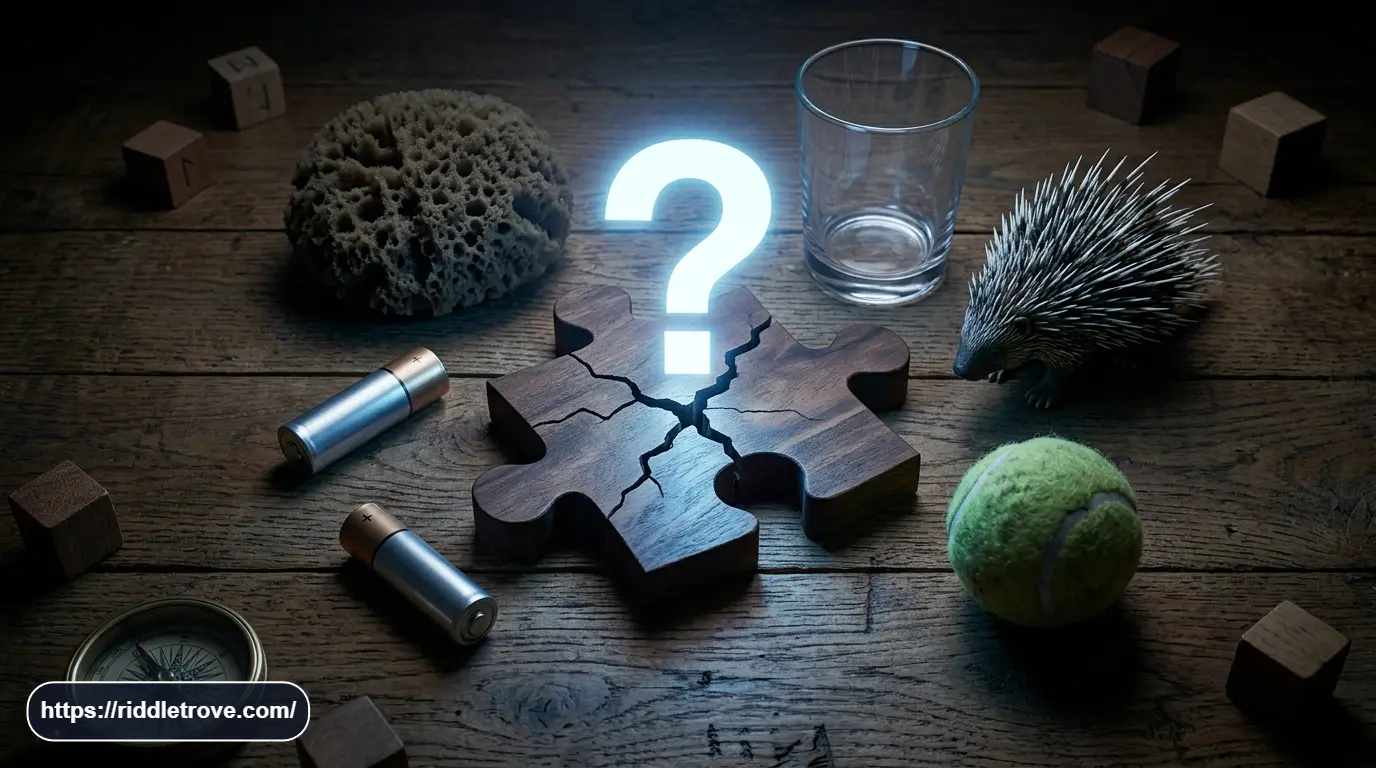
Riddle 83: What is full of holes but holds water?
Answer: A sponge.
Riddle 84: What has 4 letters, sometimes 9, but never 5?
Answer: The words “four,” “sometimes,” and “never.”
Riddle 85: What begins eternity and ends time?
Answer: The letter E.
Riddle 86: What has no life but can die?
Answer: A battery.
Riddle 87: What can go through glass without breaking it?
Answer: Light.
Riddle 88: What has a thousand needles but cannot sew?
Answer: A porcupine.
Riddle 89: What can you serve but never eat?
Answer: A tennis ball.
Riddle 90: What has an end but no beginning?
Answer: A stick.
Final Riddle Challenge
Riddle 91: The more you take, the more you leave behind. What am I?
Answer: Footsteps.
Riddle 92: I speak without a mouth and hear without ears. What am I?
Answer: An echo.
Riddle 93: I have no body, but I have a voice. What am I?
Answer: An echo.
Riddle 94: What can be lost but never held?
Answer: Time.
Riddle 95: What has no weight but can make you sink?
Answer: A thought.
Riddle 96: What can point in every direction but cannot move?
Answer: A compass needle.
Riddle 97: What has a key but cannot unlock anything?
Answer: A piano.
Riddle 98: What goes through towns and over hills but never moves?
Answer: A road.
Riddle 99: What can you see with your eyes closed?
Answer: A dream.
Riddle 100: I leave a mark whenever I walk. What am I?
Answer: A footprint.
Conclusion
The “more you take, the more you leave behind” riddle works because the word “take” makes you think about taking an object. The answer changes that idea completely: when you take steps, you leave footprints behind. That simple twist makes the riddle memorable.
The 100 riddles above use different types of wordplay, objects, logic, nature clues, jokes, and tricky questions. Start with the easy ones, then work toward the final challenge without checking the answers too quickly.
Frequently Asked Questions
What is the answer to the more you take, the more you leave behind riddle?
The classic answer is footsteps. The more steps you take while walking, the more footprints you leave behind.
What is a good hint for this riddle?
Think about something you take while walking that creates a trail behind you.
Why are footsteps the answer?
Each step you take can leave a footprint or mark on the ground. Therefore, taking more steps can mean leaving more traces behind.
Is the answer footsteps or footprints?
Footsteps is the classic answer, while footprints describes the marks left by those steps.
Is this a hard riddle?
It is usually considered an easy-to-medium riddle because the wording is simple but the answer depends on a change in meaning.
What type of riddle is it?
It is a classic wordplay and lateral-thinking riddle.
Can kids solve this riddle?
Yes. The wording is short and the concept is based on an everyday activity, making it suitable for family and classroom-friendly puzzle activities.
What makes a good riddle?
A good riddle gives enough clues to reach the answer while using wording that encourages the solver to think differently.
1 thought on “The More You Take, the More You Leave Behind Riddle”