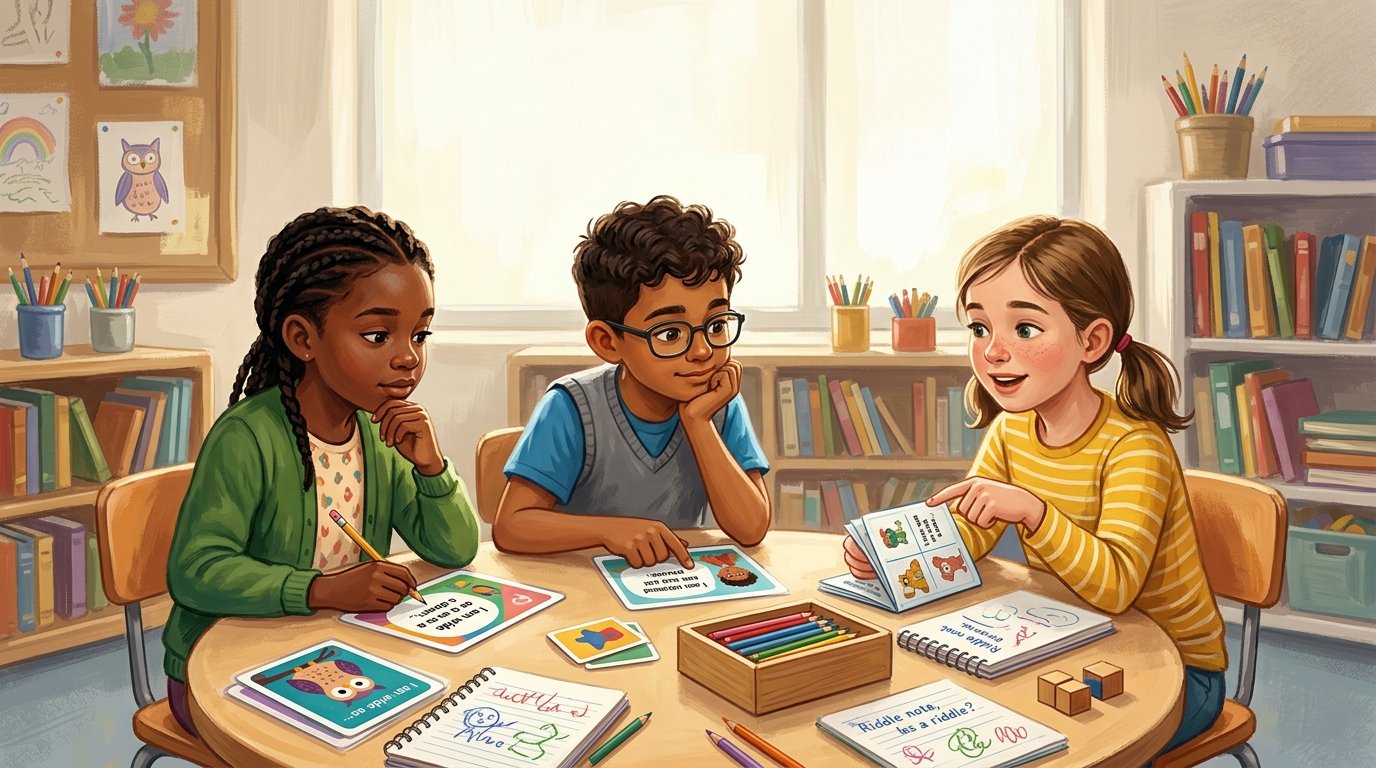
Finding best riddles for kids can be harder than it sounds. Some are so easy that children guess the answer before finishing the first clue. Others depend on tricky adult wordplay that younger readers may not understand.
This collection keeps the sweet spot in the middle. The riddles use familiar objects, animals, school situations, patterns, and simple logic while gradually becoming more challenging.
You can use them at home, in the classroom, during road trips, at family game nights, or whenever kids need a fun brain break. Read each riddle aloud, give kids time to think, and reveal the answer only when they’re ready.
Easy Riddles for Kids
These first riddles are a gentle warm-up. They use familiar things and mostly require one clear connection.
Riddle 1: I have pages but I am not a tree. I have a cover but I am not a blanket. What am I?
Answer: A book
Riddle 2: I shine in the sky during the day and make the world bright. What am I?
Answer: The sun
Riddle 3: I have four legs, but I never take a walk. You may sit on me while doing homework. What am I?
Answer: A chair
Riddle 4: I can be opened and closed, but I am not a door. I carry your school supplies. What am I?
Answer: A backpack
Riddle 5: I fall from clouds, but I am not a feather. I can make puddles on the ground. What am I?
Answer: Rain
Riddle 6: I have a face and two hands, but I cannot clap. What am I?
Answer: A clock
Riddle 7: I am yellow, curved, and easy to peel. Monkeys are often shown eating me. What am I?
Answer: A banana
Riddle 8: I have many teeth, but I cannot bite. I help make your hair neat. What am I?
Answer: A comb
Riddle 9: You can hear me ring at school when class begins or ends. What am I?
Answer: A school bell
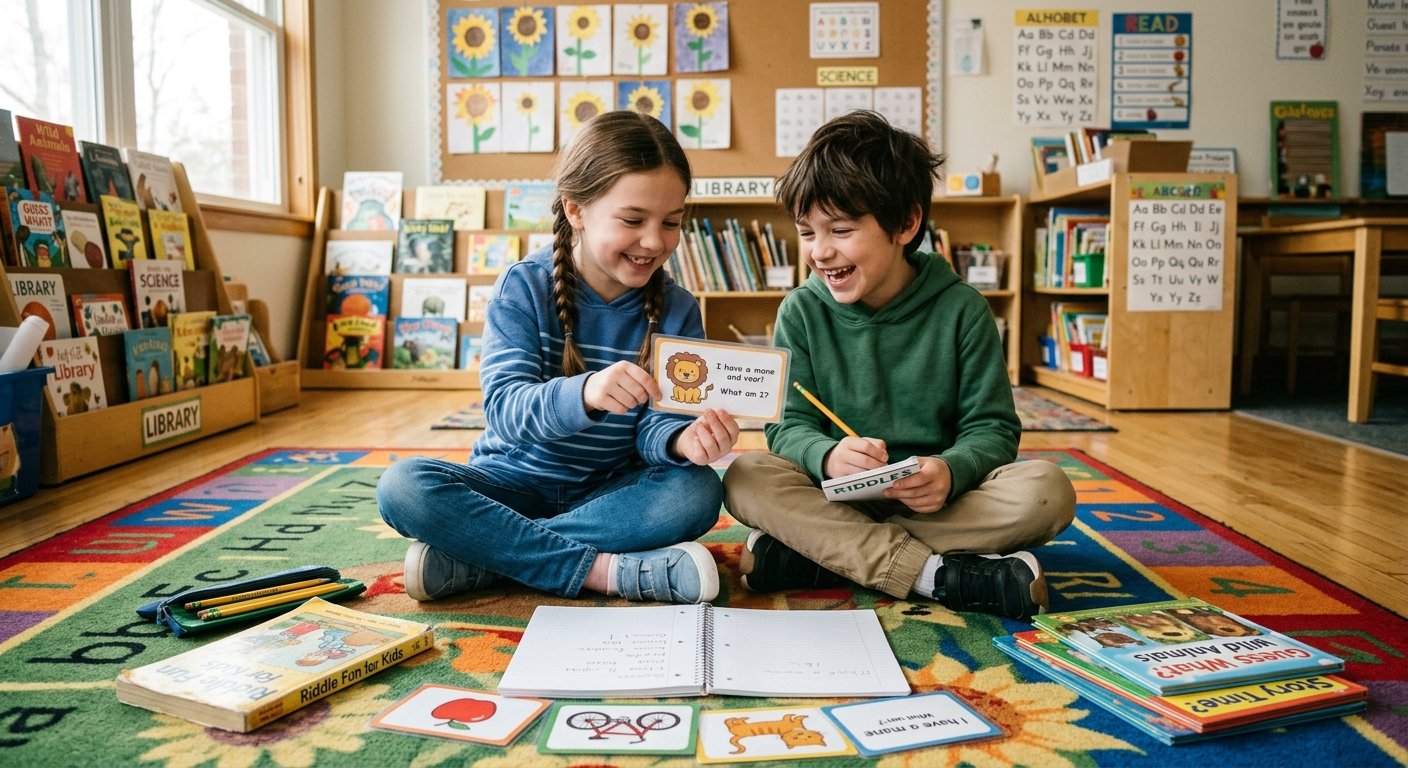
Riddle 10: I am soft, have feathers, and can fly through the sky. What am I?
Answer: A bird
Funny Riddles for Kids
A good funny riddle should have a clear setup and a punchline kids can understand. These rely on simple wordplay and playful surprises.
Riddle 11: Why did the pencil go to the doctor?
Answer: Because it felt pointless.
Riddle 12: What kind of tree can you carry in your hand?
Answer: A palm tree.
Riddle 13: What has ears but cannot hear?
Answer: A cornfield.
Riddle 14: Why did the math book look worried?
Answer: It had too many problems.
Riddle 15: What kind of room has no doors or windows?
Answer: A mushroom.
Riddle 16: Why did the student eat his homework?
Answer: The teacher said it was a piece of cake.
Riddle 17: What do you call a sleeping bull?
Answer: A bulldozer.
Riddle 18: Why did the cookie go to the doctor?
Answer: Because it felt crummy.
Riddle 19: What do you call cheese that is not yours?
Answer: Nacho cheese.
Riddle 20: Why did the bicycle fall over?
Answer: Because it was two-tired.
Animal Riddles for Kids
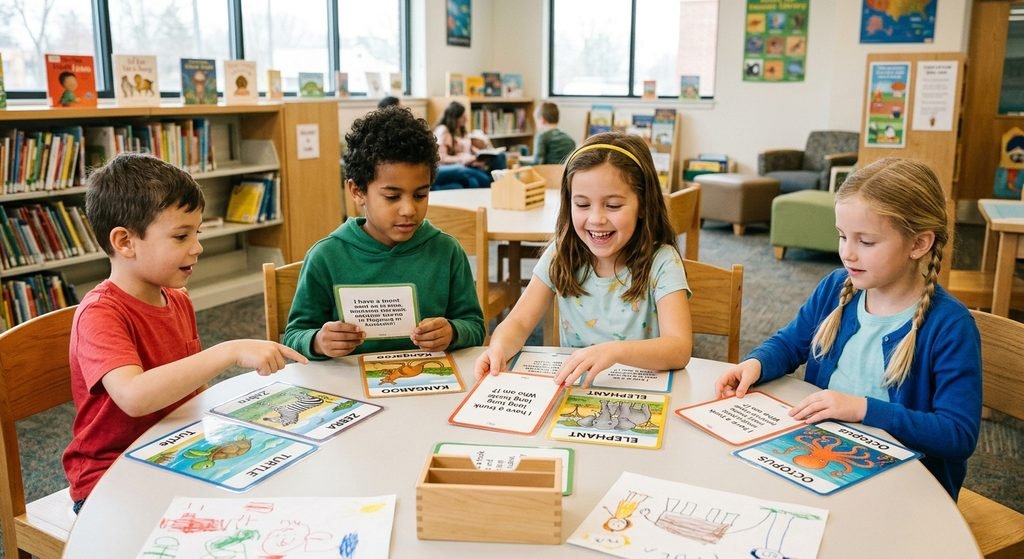
Animal riddles are great for younger children because the clues can connect familiar behaviors with less obvious answers.
Riddle 21: I have a long trunk, big ears, and strong legs. I can spray water with my nose. What am I?
Answer: An elephant
Riddle 22: I hop instead of walk, carry my baby in a pouch, and am famous for living in Australia. What am I?
Answer: A kangaroo
Riddle 23: I have black and white stripes and look a little like a horse. What am I?
Answer: A zebra
Riddle 24: I crawl slowly and carry my house on my back. What am I?
Answer: A snail
Riddle 25: I can change my colors to blend into my surroundings. What am I?
Answer: A chameleon
Riddle 26: I live in water, have fins, and breathe through gills. What am I?
Answer: A fish
Riddle 27: I have eight arms and live in the ocean. I can squirt ink when I am scared. What am I?
Answer: An octopus
Riddle 28: I am small, I make honey, and I can sting. What am I?
Answer: A bee
Riddle 29: I sleep upside down and can fly at night. What am I?
Answer: A bat
Riddle 30: I have a shell, move slowly, and can pull my head inside when I feel threatened. What am I?
Answer: A turtle
Tricky Riddles for Kids
Now the clues become less direct. Read these slowly because the answer may depend on noticing a small detail.
Riddle 31: A farmer has three chickens. Each chicken lays one egg. How many eggs do they lay altogether?
Answer: Three eggs
Riddle 32: A boy has five apples and gives two away. Then his friend gives him one more. How many apples does he have?
Answer: Four apples
Riddle 33: I am full of holes, but I can still hold water. What am I?
Answer: A sponge
Riddle 34: What can you catch but cannot throw?
Answer: A cold
Riddle 35: The more you take from me, the bigger I become. What am I?
Answer: A hole
Riddle 36: I follow you when the sun is shining, but I disappear in the dark. What am I?
Answer: Your shadow
Riddle 37: What has a neck but no head?
Answer: A bottle
Riddle 38: You see me once in June, twice in July, but not at all in May. What am I?
Answer: The letter J
Riddle 39: I am lighter than a feather, but even the strongest person cannot hold me for very long. What am I?
Answer: Their breath
Riddle 40: What gets wetter the more it dries?
Answer: A towel
Best Hard Riddles for Kids
These riddles require more careful thinking. Encourage kids to explain how they reached the answer instead of simply guessing.
Riddle 41: A room has three lights outside it and three switches beside the door. Each switch controls one light. You may enter the room only once. How can you determine which switch controls which light?
Answer: Turn one switch on for a few minutes, then turn it off. Turn a second switch on and enter the room. The light that is on belongs to the second switch. The warm light belongs to the first switch. The cold light belongs to the third switch.
Riddle 42: A father and son are in a car accident. The father dies. At the hospital, the surgeon says, “I cannot operate. This is my child.” How is that possible?
Answer: The surgeon is the child’s mother.
Riddle 43: You have a basket containing five apples. Five children each take one apple, but one apple is still left in the basket. How?
Answer: The last child takes the basket with the apple still inside it.
Riddle 44: Two people play five games of chess. Each person wins the same number of games, and there are no draws. How is this possible?
Answer: They were playing against different opponents, not necessarily against each other.
Riddle 45: A clock takes six seconds to strike six times. How long does it take to strike twelve times?
Answer: Twelve seconds. There are eleven gaps between twelve strikes, but there are five gaps during six strikes. Each gap is 1.5 seconds, so twelve strikes take 16.5 seconds.
Riddle 46: A girl walks into a store with $10. She buys something for $7 and receives $3 change. What does she have now?
Answer: The item she bought and $3.
Best and Hardest Riddles for Older Kids
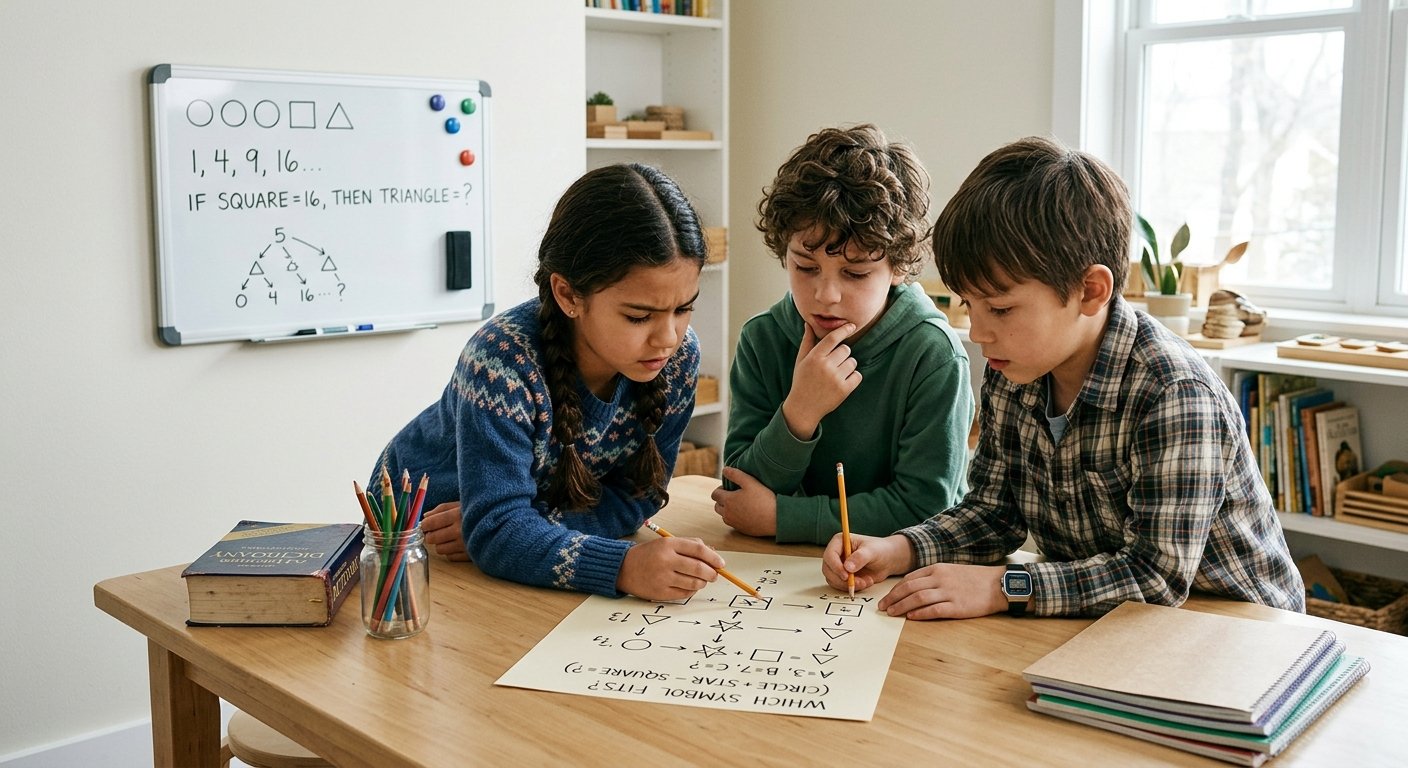
These are a step up from simple object riddles. They work especially well for older elementary students and family puzzle sessions.
Riddle 47: three boxes are labeled Apples, Oranges, and Apples & Oranges. Every label is wrong. You may take one fruit from one box. Which box should you choose first?
Answer: The box labeled Apples & Oranges. Since every label is wrong, it must contain only apples or only oranges. One fruit tells you which one it is, allowing you to correct all three labels.
Riddle 48: A farmer has 17 sheep. All but 9 run away. How many sheep remain?
Answer: Nine.
Riddle 49: A child has a 10-page book. She tears out two pages. How many pages remain in the book?
Answer: Eight pages.
Riddle 50: You have three coins that total 30 cents. One of them is not a nickel. What are the coins?
Answer: A quarter, a nickel, and a nickel. One coin is not a nickel, while the other two can be.
Riddle 51: Five friends each shake hands with every other friend exactly once. How many handshakes happen?
Answer: Ten.
Riddle 52: A number is greater than 20 and less than 30. It is even and its digits add up to 8. What number is it?
Answer: 26.
Long Riddles for Kids
These take a little longer to read and solve. They are useful when you want children to focus on several clues instead of guessing from one sentence.
Riddle 53: I can travel across a room without taking a single step. I can reach the top of a building without climbing stairs. You cannot hold me in your hands, but you can see me when I bounce from one surface to another. What am I?
Answer: Light
Riddle 54: I start my journey inside a tree. Someone shapes me into a thin body and puts me inside a wooden holder. I become shorter every time I help someone write. When I am finally too small to use, I may end up in a pencil sharpener. What am I?
Answer: Pencil lead
Riddle 55: I can be opened without a key. I can be closed without a lock. I may contain thousands of words, but I never speak. You can carry me almost anywhere, and every page can take you somewhere new. What am I?
Answer: A book
Riddle 56: I wake up when the sun comes out. What am I?
Answer: A shadow
Riddle 57: I have no mouth, but I can answer you. I have no ears, but I can seem to hear you. Shout toward a mountain or an empty canyon, and I may send your own sound back. What am I?
Answer: An echo
Riddle 58: I can be full in the morning and empty by evening. People may fill me with water, juice, or milk. I do not drink what is inside me, but someone else can. What am I?
Answer: A cup
Riddles for Teens
These have slightly more abstract clues and wordplay, making them a better fit for older kids and teens.
Riddle 59: I am always in front of you, but you can never see me. What am I?
Answer: The future
Riddle 60: What belongs to you but is used more often by other people?
Answer: Your name
Riddle 61: I can be written, spoken, broken, and kept. What am I?
Answer: A promise
Riddle 62: The more you know me, the less you need to say. What am I?
Answer: Understanding
Riddle 63: I can make a room brighter without taking up any space. What am I?
Answer: Light
Riddle 64: I have many branches but no leaves, fruit, or bark. What am I?
Answer: A family tree
Riddle 65: What can run but never walk, has a mouth but never talks, and has a bed but never sleeps?
Answer: A river
Riddle 66: I can be passed from person to person without being handed over. What am I?
Answer: A rumor
Riddle 67: What begins with an E, ends with an E, but contains only one letter?
Answer: An envelope
Riddle 68: What has a beginning and an end but no middle?
Answer: The word “beginning” has a beginning and an end, but this is a wordplay riddle rather than a literal object. The intended answer is the letter sequence in the word itself.
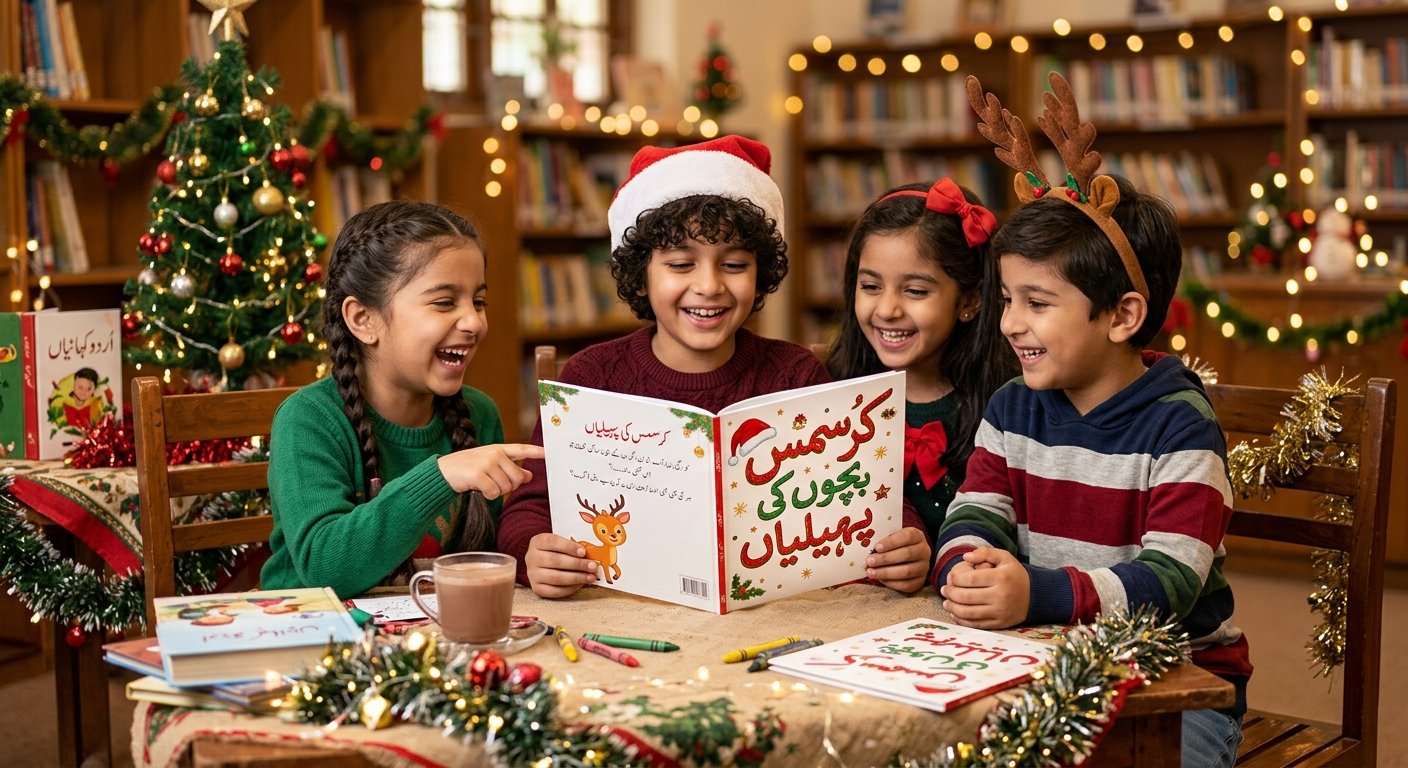
Christmas Riddles for Kids
These seasonal riddles are useful for classroom parties, family gatherings, and holiday game nights.
Riddle 69: I have a red suit, a white beard, and a very famous laugh. Who am I?
Answer: Santa Claus
Riddle 70: I hang on a tree, sparkle in the light, and come in many colors. What am I?
Answer: A Christmas ornament
Riddle 71: I am cold, white, and fall from the sky in winter. What am I?
Answer: Snow
Riddle 72: I am placed on top of a Christmas tree and often have five points. What am I?
Answer: A star
Riddle 73: I am wrapped in paper and may be hiding under a Christmas tree. What am I?
Answer: A present
Riddle 74: I am green, covered with decorations, and become the center of attention during Christmas. What am I?
Answer: A Christmas tree
Riddle 75: I have four legs and may help Santa travel through the night. What am I?
Answer: A reindeer
Riddle 76: I am hung by a fireplace and wait to be filled with gifts. What am I?
Answer: A stocking
Riddle 77: I am sweet, often striped red and white, and shaped like a shepherd’s crook. What am I?
Answer: A candy cane
Riddle 78: I may be made of snow, have a carrot nose, and stand outside in winter. What am I?
Answer: A snowman
Final Challenge Riddles for Kids
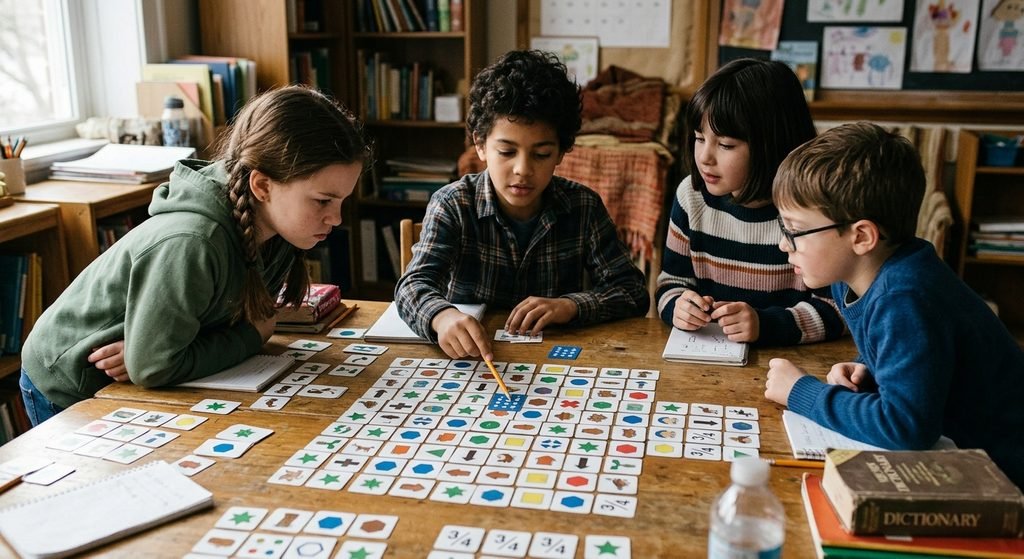
These are the toughest riddles in the collection. They work best when kids have already warmed up with the easier sections.
Riddle 79: A child has four cards: a red card, a blue card, a green card, and a yellow card. The red card is not first. The yellow card is last. The blue card comes before the green card. Which card could be first?
Answer: Blue
Riddle 80: Three children each choose a different fruit: an apple, a banana, or an orange. Mia does not choose the apple. Leo does not choose the banana. Sam chooses the orange. What fruit does Mia choose if Leo has the apple?
Answer: Banana
Riddle 81: A box has four balls: one red, one blue, one green, and one yellow. The red ball is next to the blue ball. The yellow ball is not next to the green ball. If green is first, what color can be second?
Answer: Red
Riddle 82: Three friends finish a race. Ava finishes before Ben. Cara finishes after Ava but before Ben. Who finishes second?
Answer: Cara
Riddle 83: You have three cups in a row. The red cup is on the left. The blue cup is on the right. The only colors are red, yellow, and blue. What color is in the middle?
Answer: Yellow
Riddle 84: Four books are arranged from left to right. The science book is not first or last. The history book is immediately to the left of the science book. The math book is first. Which book is second?
Answer: History
How to Use These Riddles With Kids
The best riddles for kids can become more interesting when you turn them into a small game instead of simply reading the answer after every clue.
Give children a few seconds to think before offering a hint. For harder riddles, ask them to explain which clue helped them most. This teaches them to reason through a problem rather than rely on guessing.
You can also split the collection by difficulty. Use the easy riddles for younger children, the tricky and hard sections for older elementary students, and the final challenges for family groups or teens.
For classrooms, try using one riddle as a morning warm-up or brain break. At home, let each child choose a riddle and challenge everyone else to solve it.
Conclusion
The best riddles for kids aren’t necessarily the longest or most complicated ones. They are the ones that make children pause, think, smile, and feel satisfied when the answer finally clicks. Start with easier clues, then move toward tricky logic and final challenges as confidence grows. Whether you’re planning a classroom brain break, family game night, road-trip activity, or just a few minutes of screen-free fun, these riddles give kids plenty of ways to practice creative thinking.
Frequently Asked Questions
What are the best riddles for kids?
The best riddles for kids are clear, fair, age-appropriate, and interesting enough to make children think. A strong riddle should give enough clues to reach one reasonable answer without making the solution completely obvious.
What age are these riddles for?
The collection covers several difficulty levels. The easy riddles work well for younger elementary children, while the hard, teen, and final challenge sections are better for older elementary students and teens.
What makes a riddle too hard for kids?
A riddle may be too hard when it depends on obscure knowledge, complicated vocabulary, adult references, or a trick that children could not reasonably discover from the clues. Difficulty should come from thinking, not missing information.
How can I make riddles more fun for children?
Turn them into a guessing game. Give children time to think, allow one or two guesses, and offer a hint when needed. You can also let children compete in teams or take turns reading riddles aloud.
Are funny riddles good for classrooms?
Yes. Short, clean funny riddles can work well as classroom brain breaks, morning meeting activities, or transitions between lessons. The humor should be easy for the intended age group to understand.
Should I give kids the answer right away?
Not usually. Let them think for a little while first. For a difficult riddle, giving one small hint is often more rewarding than immediately revealing the answer.
What are good riddles for teens?
Good riddles for teens often involve wordplay, logic, patterns, relationships, and more than one step of reasoning. They can be more abstract than riddles designed for younger children.
Can these riddles be used for family game night?
Absolutely. Mix easy, funny, tricky, and final challenge riddles so everyone gets a chance to solve something. Older players can also help younger children reason through the harder clues.
1 thought on “Best Riddles for Kids: 100 Fun and Challenging Riddles”